

Need More Leads Without Overspending? Start Here

Kirsten Johnson, Founder of Reverie
Most business owners want the same three things when starting a new project:
They want it done well.
They want it completed quickly.
And they want it to fit comfortably within the budget.
Those are reasonable goals. The challenge is that they rarely carry equal weight.
A familiar project-management principle says, “Good, fast, and cheap—pick two.” Sometimes called the Iron Triangle, it illustrates the relationship between quality, timeline, and cost. When one constraint changes, at least one of the others usually needs to change with it.
This principle applies to nearly every business investment, including website design, branding, photography, content, SEO, advertising, and print projects.
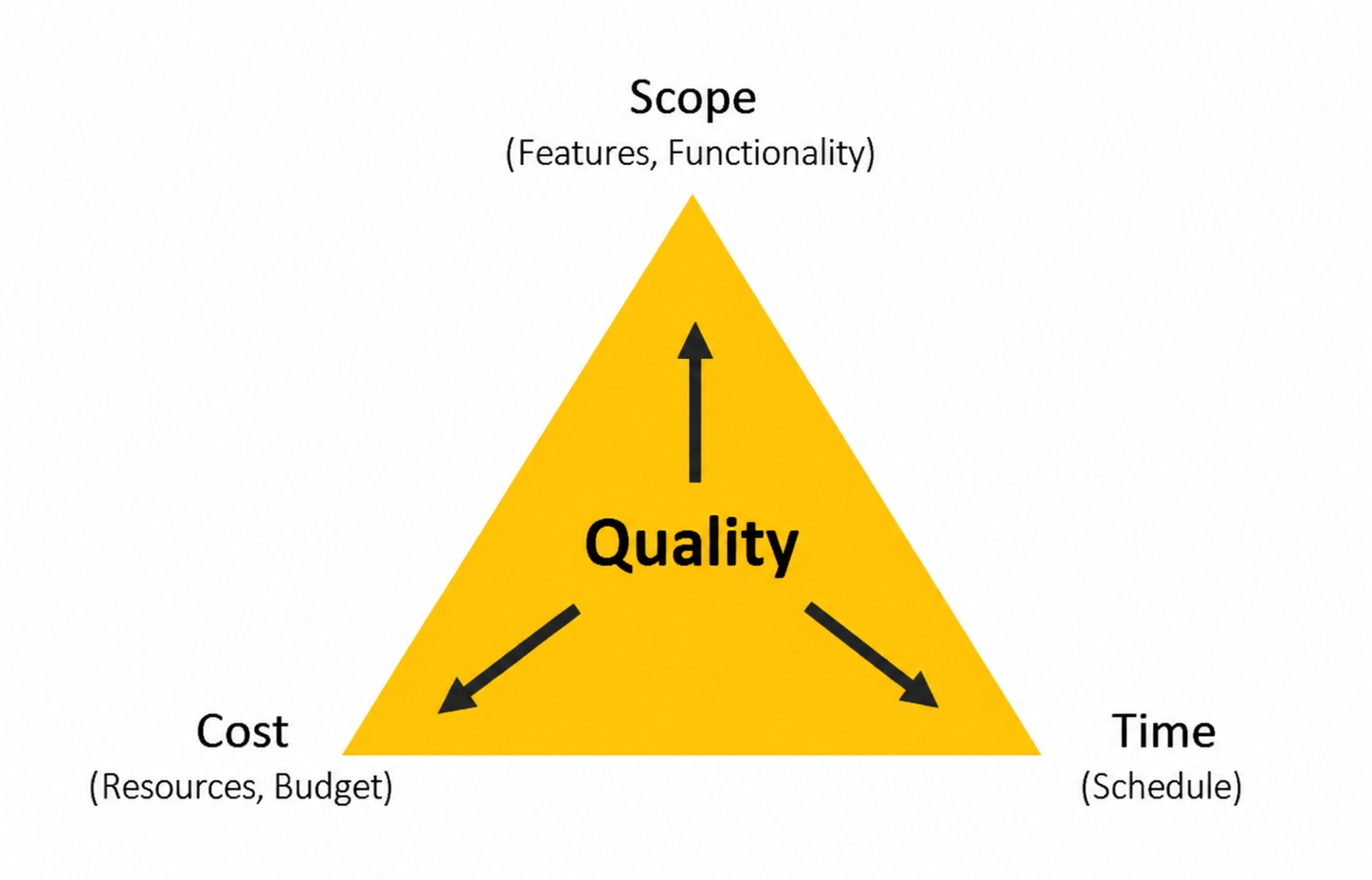
Budget, timeline, scope, and quality are connected. Changing one can affect the others.
What Does “Good, Fast, Cheap” Mean for Google Ads?
Google Search Ads can put your business in front of people who are actively searching for the products or services you provide.
But that doesn’t mean every business should run the same campaign—or spend the same amount.
Here’s how the tradeoff typically works.
Fast + Cheap
You can launch quickly with a smaller advertising budget, but the campaign needs to be focused.
If you’re trying to promote six different services across ten cities while working with a limited budget, you’re asking those advertising dollars to do a lot.
Instead, we may need to narrow the campaign to:
One or two priority services
A smaller geographic area
The searches showing the strongest buying intent
One primary conversion goal, such as phone calls or form inquiries
Google Ads allows geographic targeting down to specific areas and radiuses, which makes this kind of focused strategy possible.
A smaller budget isn’t necessarily the problem. An unfocused budget is.
Fast + Good
If you want to reach a larger market, advertise several services, and capture more high-intent searches quickly, you generally need enough budget to support that larger scope.
But spending more money by itself doesn’t create a good campaign.
The fundamentals still matter:
Keyword and search-term strategy
Geographic targeting
Ad messaging
Conversion tracking
Landing-page experience
Budget allocation
Ongoing campaign optimization
Google now provides search-term insights specifically to help advertisers understand the intent behind searches and identify which search categories are actually generating clicks and conversions.
More budget can create more opportunity. Strategy determines how effectively that opportunity is used.
Good + Cheap
This is often the best starting point for a small business with a limited advertising budget.
Rather than attempting to advertise everything immediately, we can concentrate the budget on the service or market that matters most.
Then we learn.
What are people actually searching?
Which searches are producing meaningful inquiries?
Which geographic areas are responding?
Which leads are actually turning into good opportunities for the business?
Once we have that information, we can make much smarter decisions about where to expand.
Here’s What This Can Look Like in a Real Google Ads Campaign
Numbers make this easier to understand.

Real Google Ads campaign example showing $791 in ad spend and approximately $264 cost per lead.
Cost Per Lead Is Important. Lead Quality Matters More.
This is where businesses can get into trouble with paid advertising.
It’s easy to look at a dashboard and focus on clicks, impressions, conversions, or the lowest possible cost per lead.
But a cheap lead that will never become a customer isn’t necessarily better than a more expensive lead that is an excellent fit for your business.
That’s why our conversations with clients go beyond:
“How many leads did Google Ads generate?”
We also want to know:
Were they the right leads?
Did they need the service you actually want to sell?
Were they located in the right service area?
Did they have realistic expectations?
Did they become legitimate opportunities for the business?
That feedback is what helps turn advertising data into better marketing decisions.
Google Ads Shouldn’t Be a “Set It and Forget It” Strategy
Launching the campaign is only the beginning.
Once ads are running, there should be an ongoing feedback loop.
We want to review:
What people are actually searching
Which keywords and search themes are producing results
Where the budget is being spent
Geographic performance
Calls and website inquiries
Cost per lead
Lead quality
Which services are creating the strongest opportunities
Then the campaign can be refined based on what the data is showing.
That’s the difference between simply spending money on Google and intentionally managing a paid search strategy.
So, Can You Get More Leads Without Spending a Fortune?
Potentially.
But the better question is:
How can we use the budget you have as strategically as possible?
If your advertising budget is limited, we would rather build a focused campaign around the service and market that matter most than stretch that same budget across too many priorities and hope something works.
You don’t necessarily need to advertise everything.
You need to determine:
What does the business need most right now?
Maybe it’s more calls for one profitable service.
Maybe it’s breaking into a specific city.
Maybe it’s filling a seasonal gap.
Maybe it’s determining whether paid search is even the right channel before increasing your investment.
Those answers should shape the campaign—not the other way around.
Good Advertising Starts With Clear Priorities
Before deciding what you should spend on Google Ads, identify three things:
What do you want to promote?
Where do you want the leads to come from?
How quickly do you need to generate opportunities?
Then your budget, campaign structure, targeting, and expectations can be built around a real business objective.
Because when it comes to Google Ads, budget matters—but focus matters just as much.
Ready to Talk About Google Ads?
Tell us what you’re trying to grow, the market you want to reach, and what you’re comfortable investing.
We’ll help you determine whether Google Ads makes sense and what a practical strategy could look like for your business.
Reverie is an Arizona website design, SEO, and Google Ads agency helping small businesses grow online in Gilbert, Queen Creek, Mesa, Chandler, and the East Valley.